
If you’re here, it’s because you’ve been prescribed Dimetrum® to treat your endometriosis.
Welcome.
What is endometriosis?
Endometriosis is a condition where cells similar to the ones in the lining of the uterus are found elsewhere in the body.1 It’s very common, affecting 10% of women and those assigned female at birth.2 That’s about 1.5 million people in the UK.1

Understanding your Dimetrum® treatment
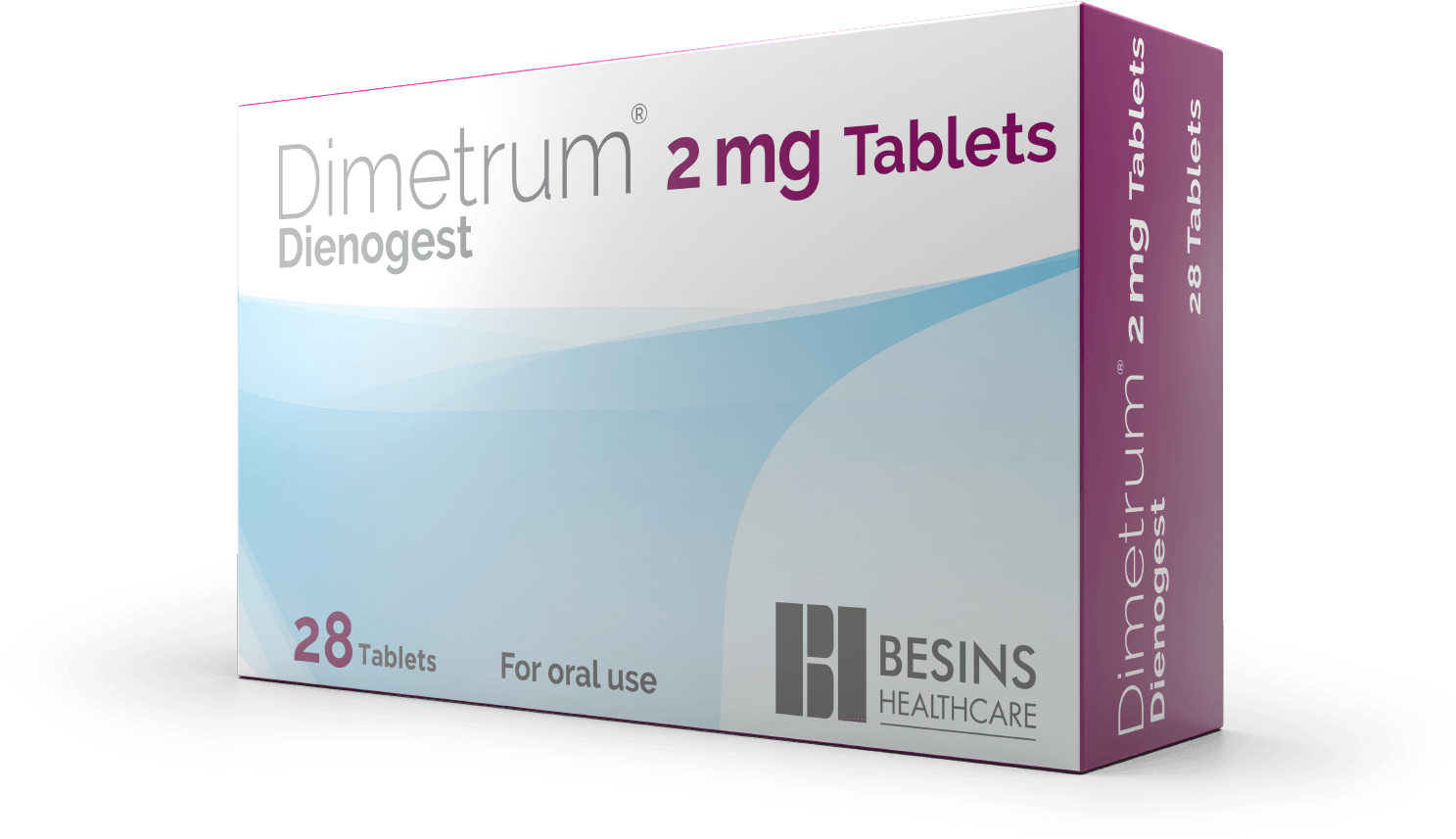
What is Dimetrum®?
Dimetrum® (dienogest) 2mg is a tablet used for the treatment of endometriosis.3 It contains a progestogen hormone called dienogest.3
What is Dimetrum® used for?
![Dimetrum® can help relieve the symptoms of endometriosis, including pain.[3]](http://bh-uk-dimetrum-stg.azurewebsites.net/wp-content/uploads/2022/12/circle-use.png)
How to take Dimetrum®
Please read the leaflet that comes in your Dimetrum® pack before using it.
- Take one table each day, preferably at the same time, with a drink if necessary3
- You can start your treatment on any day of your menstrual cycle3
- Once you’ve finished a box of Dimetrum®, start the next one without interruption3
- If you’re using hormonal contraception, you need to stop taking this before you begin taking Dimetrum®3
- If contraception is required, please use a non-hormonal method like condoms3
- If you vomit within four hours of taking a Dimetrum tablet, or have severe diarrhoea, take another tablet as soon as possible.3
Possible side effects
If you miss one or more tablets, take one tablet only as soon as you remember, and then continue next day taking the tablet at your usual time. Do not take a double dose to make up for a forgotten tablet.
Like all medicines, this medicine can cause side effects, although not everybody gets them. These effects are more common during the first months after start of intake of Dimetrum 2 mg tablets and usually disappear with continued use. You may also experience changes in your bleeding pattern, such as spotting, irregular bleeding or your periods may stop completely.3
Common (affecting between 1 and 10 in every 100 users)
- Weight gain
- Depressed mood, problems sleeping, nervousness, loss of interest in sex or changed mood
- Headache or migraine
- Nausea, abdominal pain, wind, swollen tummy or vomiting
- Acne or hair loss
- Back pain
- Breast discomfort, ovarian cyst or hot flushes
- Uterine/vaginal bleeding including spotting
- Weakness or irritability.
Uncommon (affecting between 1 and 10 in every 1,000 users)
- Anemia
- Weight loss or increase in appetite
- Anxiety, depression or mood swings
- Imbalance in the autonomic nervous system (controls unconscious bodily functions, e.g. perspiration) or disturbed attention
- Dry eye
- Tinnitus
- Unspecific circulatory problems or uncommon palpitations
- Low blood pressure
- Shortness of breath
- Diarrhoea, constipation, abdominal discomfort, inflammation of the stomach and intestines, (gastrointestinal inflammation), inflammation of the gums (gingivitis)
- Dry skin, excessive sweating, severe itching of the whole body, male pattern hair growth (hirsutism), brittle nails, dandruff, dermatitis, abnormal hair growth, hypersensitive response to light or problems with skin pigmentation
- Pains in your bones, muscle spasms, pains and/or a sensation of heaviness in your arms and hands or legs and feet
- Urinary tract infection
- Vaginal thrush, dryness of the genital area, vaginal discharge, pelvic pain, atrophic inflammation of the genitals with discharge (atrophic vulvovaginitis), or a lump or lumps in the breast
- Swelling due to fluid retention.
- Any of the conditions mentioned in section 2 of the Package Leaflet that comes with your medicine
- Severe pain and/or swelling in one of your legs
- Sudden severe pain in the chest which may reach the left arm
- Sudden breathlessness
- Sudden cough without an obvious cause
- Any unusual, severe or long-lasting headache or worsening of migraine
- Partial or complete blindness or double vision
- Difficulty in speaking or inability to speak
- Giddiness or fainting
- Weakness, strange feeling, or numbness in any part of the body.
Additional side effects in adolescents (12 to under 18 years): loss of bone density.
If you experience any of the following, stop using Dimetrum® and see your doctor immediately:3
- Any of the conditions mentioned in section 2 of the Package Leaflet that comes with your medicine
- Severe pain and/or swelling in one of your legs
- Sudden severe pain in the chest which may reach the left arm
- Sudden breathlessness
- Sudden cough without an obvious cause
- Any unusual, severe or long-lasting headache or worsening of migraine
- Partial or complete blindness or double vision
- Difficulty in speaking or inability to speak
- Giddiness or fainting
- Weakness, strange feeling, or numbness in any part of the body.
Please ensure that you read the Package Leaflet that comes with your medicine for a full list of warnings and precautions.
When not to use Dimetrum®
Do not use Dimetrum® if any of the following applies to you.
If you’re not sure about any of the points below, please speak to your healthcare professional before using Dimetrum®:3
- If you have, or have ever had, a blood clot in a vein (thrombosis), such as in the legs (deep venous thrombosis) or the lungs (pulmonary embolism)
- If you have, or recently have had, a disease caused by blood clots in the arteries, such as a heart attack, stroke or angina
- If you have diabetes with blood vessel damage
- If you have, or have ever had, a liver disease and your liver function tests have not returned to normal
- If you have, or have ever had, a benign or malignant liver tumour
- If you have, or have had, breast cancer. Or if you are suspected of having it
- If you have cancer which is sensitive to oestrogens, such as cancer of the womb lining (endometrium), or if you are suspected of having it
- If you have any unexplained vaginal bleeding
- If you are allergic to dienogest or any of the other ingredients in this product.
If any of the above conditions appear for the first time while using Dimetrum, stop using it at once and speak to your doctor immediately.
Reporting of side effects
If you get any side effects from taking Dimetrum®, talk to your doctor, pharmacist or nurse. This includes any possible side effects not listed in the package leaflet. You can also report side effects directly via the Yellow Card Scheme at: www.mhra.gov.uk/yellowcard. Or search for MHRA Yellow Card in the Google Play or Apple App Store. By reporting side effects, you can help to provide more information on the safety of this medicine.
Resources

Besins Healthcare (UK) Ltd does not recommend, endorse or accept liability for the following sites controlled by third-parties.
References
- Dimetrum SmPC: https://www.medicines.org.uk/emc/product/14039/smpc (Last accessed August 2025)
- Endometriosis UK. What is endometriosis? Accessed August 2025. https://www.endometriosis-uk.org/what-endometriosis
- Endometriosis UK. Information. Accessed August 2025. https://www.endometriosis-uk.org/information
- Dimetrum. Patient Information Leaflet. Accessed August 2025. https://www.medicines.org.uk/emc/product/14039/pil